Overview
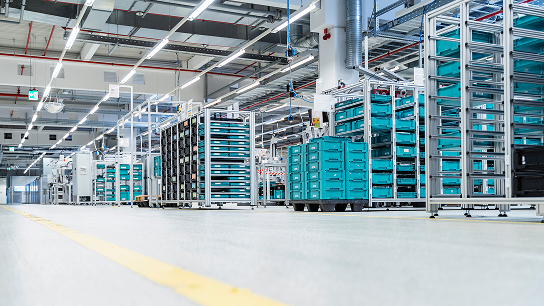
Warehouses and logistics facilities are routinely underestimated as moisture control environments. The assumption is that because they store goods rather than manufacture them, the environmental requirements are less demanding. That assumption is wrong, and the cost of acting on it shows up in corrosion claims, packaging failures, mold contamination, and damaged inventory that is discovered weeks or months after the moisture event that caused it.
A warehouse is not a sealed box. It breathes. Every truck door opening, every personnel entry, every shift change pulls outdoor air into the building. In humid climates, that air carries substantial moisture loads. In cold climates, the interaction between cold structural surfaces and warm humid air creates condensation on racking, on products, and on the floor. Both scenarios cause damage. Neither is difficult to prevent with the right system in place.
The Real Moisture Sources in Warehouse Environments
Before specifying any equipment, the moisture sources need to be identified correctly. Most moisture problems in warehouses are blamed on the wrong cause, which leads to solutions that do not fix anything.
Infiltration through loading dock doors is the single largest uncontrolled moisture input in most distribution facilities. A standard loading dock door opened for 10 minutes during summer in a humid climate can introduce several kilograms of moisture into the building. Facilities with high throughput — 20, 30, 50 door cycles per day per dock — are continuously fighting this infiltration load. High-speed roll-up doors, dock shelters, and air curtains reduce but do not eliminate this load. Dehumidification must account for it.
Concrete slab off-gassing is a moisture source that surprises most facility managers. Newly poured concrete slabs release moisture for 12 to 18 months after placement. Even existing slabs in contact with ground moisture will transmit water vapor upward through capillary action if no vapor barrier was installed beneath the slab. In cold seasons, this upward moisture migration increases as the slab surface cools. Facilities built on slabs without sub-slab vapor barriers will have persistent ground-level humidity issues regardless of how much dehumidification is installed above the floor.
Product respiration applies specifically to warehouses storing agricultural products, fresh produce, paper, cardboard, and timber. These materials absorb and release moisture as ambient RH fluctuates. A pallet of corrugated cardboard boxes stored at 80% RH will absorb moisture, soften, and eventually fail structurally under load. When that same pallet is moved to a cooler environment, it releases moisture into the local air. Facilities that store mixed product types — dry goods alongside temperature-sensitive goods — need to understand that the dry goods themselves are a moisture source.
Roof condensation and leakage is structural rather than environmental, but it produces the same result. Metal roof panels in cold climates develop condensation on the interior surface when the panel temperature drops below the dew point of the interior air. This is distinct from roof leakage — the water is forming from inside the building, not entering from outside. The result is dripping water onto racking, products, and floors. Insulation with a continuous vapor barrier on the warm interior side prevents this. In existing buildings where retrofitting insulation is impractical, maintaining indoor RH below 60% reduces the frequency and severity of condensation events.
Refrigerated zone interfaces create a specific problem in cold chain facilities. Where ambient-temperature warehouse space adjoins refrigerated rooms or blast freezers, the temperature differential drives moisture migration. Warm humid air contacts cold surfaces at the interface and deposits moisture. Door seals degrade over time. Condensation accumulates on door frames and floor areas near refrigerated entries. Without active dehumidification in the interface zone, this condensation creates slip hazards and accelerates corrosion of the refrigerated room structure.
What Happens When Moisture Is Not Controlled
The damage patterns from uncontrolled warehouse humidity follow predictable progressions. Understanding them helps justify the investment in prevention.
Steel racking corrosion begins as surface oxidation that appears cosmetic. Within 18 to 24 months of sustained humidity above 70% RH, the oxidation penetrates the surface coating and begins attacking the base metal. Structural racking in most warehouses is designed to specific load ratings based on the original material cross-section. Corrosion reduces that cross-section. Facilities that have not inspected racking in humid environments for several years are often operating above the actual safe working load of their corroded racking. Racking replacement costs substantially more than the dehumidification system that would have prevented the corrosion.
Cardboard and paper packaging failure is directly linked to humidity. The compressive strength of corrugated cardboard decreases approximately 40% when RH increases from 50% to 85%. Pallet stacking heights that are safe at 50% RH become unsafe at 80% RH. Collapsed pallet stacks in humid warehouses are a recurring insurance claim category. They are also a safety incident category.
Mold growth on stored goods follows a well-understood progression. At 65% RH, mold spores that are present on virtually every surface can begin to germinate on organic materials given sufficient time. At 75% RH and above, germination occurs within 24 to 48 hours on paper, fabric, and food packaging. By the time mold is visually detected, the contamination is typically 1 to 3 weeks old and has spread to adjacent products. In food and pharmaceutical warehousing, a mold contamination event triggers quarantine, testing, and potentially full-batch disposal. The cost is not proportional to the size of the initially contaminated area.
Electronic and precision goods damage from humidity is often latent. Moisture absorbed into PCBs, connectors, and sensor housings during storage does not necessarily cause immediate failure. It causes failure in the field, weeks or months after the product has been shipped and installed. The correlation between warehouse storage conditions and field failure rates is well established in electronics manufacturing quality data, but it requires systematic data collection to see. Facilities storing electronic goods without humidity control are creating warranty exposure that does not surface until after the product is in the customer's hands.
Floor condensation in cold chain and refrigerated logistics facilities creates slip hazards that represent both safety and liability risk. The floor surface temperature in an ambient zone adjacent to a blast freezer can be several degrees below the ambient dew point for extended periods. Water films on smooth concrete or epoxy floors are not always visible. Condensation-related slip incidents in cold chain facilities are among the more common warehouse injury categories.
Environmental Targets by Warehouse Type
These parameters represent operational targets based on industry standards and common customer requirements. Specific stored products, regulatory requirements, or insurance conditions may require tighter tolerances.
| Warehouse Type | Temperature | Target RH |
|---|---|---|
| General dry goods storage | Ambient | Below 65% RH |
| Pharmaceutical ambient storage | 15–25°C | 35–65% RH (ICH Q1A) |
| Electronics and precision goods | 18–25°C | 40–60% RH |
| Paper, cardboard, and print media | 18–24°C | 45–55% RH |
| Timber and wood products | 15–25°C | 40–60% RH |
| Food (non-refrigerated, dry) | 10–21°C | Below 60% RH |
| Steel and metal components | Ambient | Below 50% RH |
| Automotive parts (bare metal) | Ambient | Below 50% RH |
| Cold chain ambient zone interface | 5–15°C | Below 70% RH |
| Archive and document storage | 16–20°C | 45–55% RH |
Equipment Selection for Warehouse Applications
Refrigerant-based dehumidifiers are the primary solution for ambient-temperature warehouse dehumidification where the target RH is between 40% and 75% and ambient temperature stays above 15°C year-round. They process large volumes of air efficiently, discharge dry air directly into the space, and drain condensate to a floor drain or sump. For large open-plan warehouses, units should be distributed across the floor area rather than concentrated at one end — a single large unit at one end of a 10,000 m² warehouse will not move air effectively to the far end of the building.
Unit placement matters. Positioning dehumidifiers near loading dock areas addresses the highest infiltration load directly. Positioning them at low level — where humid air and floor-level condensation are most problematic — improves efficiency compared to ceiling-mounted units in buildings with high eaves.
Desiccant rotary dehumidifiers become necessary in three scenarios: when ambient temperature drops below 10°C and refrigerant-based units lose effectiveness due to coil frosting; when target RH must be maintained below 40%; or when the warehouse stores goods that require very low dew point conditions, such as certain metal components or military equipment. Cold chain logistics facilities in climates with winters below 5°C should specify desiccant units as the primary dehumidification technology or as a supplement to refrigerant units during cold months.
Spot cooling and precision temperature control is required in zones within larger warehouse facilities where specific products need tighter temperature tolerances than the general ambient. Pharmaceutical ambient storage areas within a general distribution center, for example, may need to maintain 15–25°C while the surrounding warehouse operates at ambient temperature. Precision chillers or split-system units with dedicated control serve these zones without requiring the entire facility to be conditioned to pharmaceutical standard.
Air curtains and vestibule pressurization are not dehumidification equipment, but they are part of an effective moisture control system for any facility with active loading operations. High-velocity air curtains across dock door openings reduce infiltration during door-open periods by 60–80%. Positive pressurization of vestibules between conditioned and unconditioned zones prevents bulk air exchange when personnel doors are opened. These measures reduce the moisture load that the dehumidification system must handle and should be included in the overall system design.
Cold Chain Facilities: Specific Considerations
Cold chain logistics presents a more complex moisture control problem than ambient warehousing because multiple temperature zones coexist in the same facility, and the interfaces between those zones are active sources of moisture problems.
The psychrometrics of cold chain moisture management are straightforward: warm air holds more moisture than cold air. When warm humid air enters a refrigerated space, the moisture condenses out on the coldest surfaces first — evaporator coils, shelving, floor areas near the door. Ice accumulates on evaporator coils and reduces cooling efficiency. Frost on floor areas near refrigerated room entries creates the slip hazards described above. Condensation on product packaging — known in the industry as "sweating" — occurs when refrigerated product is moved into warmer ambient zones.
Controlling humidity in the ambient buffer zone is the most effective intervention. If the ambient zone adjoining refrigerated rooms is maintained below 55% RH, the moisture load driven into the refrigerated space each time a door is opened is substantially reduced. Evaporator defrost frequency decreases. Floor condensation at the interface is eliminated or significantly reduced. The energy cost of maintaining lower RH in the buffer zone is typically recovered in reduced defrost energy consumption in the refrigerated rooms.
Product pulldown areas — where refrigerated goods are staged at ambient temperature before loading — require particular attention. Products pulled from -20°C cold storage and staged in a 20°C dock area will accumulate condensation on their surfaces as the packaging temperature rises through the dew point of the ambient air. If the ambient area is maintained at 50% RH or below, the dew point of the ambient air is approximately 9°C at 20°C ambient — low enough that product packaging will have warmed past that temperature within minutes, and sustained condensation is avoided. At 70% RH, the dew point is approximately 14°C, meaning condensation persists much longer on the product surface.
Monitoring Requirements
Humidity monitoring in warehouse environments should not rely on a single sensor positioned at eye level near the office entrance. This setup tells facility managers what the humidity is in one corner of the building. It tells them nothing about conditions at floor level near the loading docks, inside racking bays, or in the far corners of the building.
A functional monitoring setup for a distribution center of 5,000 m² or more should include sensors distributed across the floor plan at two heights: at 1.5 m (representative of pallet-stored goods) and at 0.3 m (representative of floor-level conditions and slab off-gassing). Sensors near loading dock areas should be logged at higher frequency during operating hours when infiltration loads are highest.
All sensor data should be logged continuously with timestamps. For pharmaceutical, food, and electronics storage, this data is a quality record and must be retained according to the applicable regulatory or customer requirement — typically 2 to 5 years minimum. Alarm setpoints should trigger notification to facility management before conditions reach levels that cause product damage, not after.
Common Specification Mistakes
Sizing on floor area alone. A 10,000 m² warehouse can have widely different moisture loads depending on ceiling height, number of dock doors, product type, outdoor climate, and construction. Floor area is a starting point for a rough estimate, not a basis for equipment selection. Moisture load calculations must include infiltration through doors, envelope leakage, slab off-gassing, and any process moisture sources.
Installing only one unit in a large facility. Air does not travel efficiently across large open spaces without mechanical assistance. A single dehumidifier — even a large one — positioned at one end of a long warehouse creates a humidity gradient from low near the unit to high at the far end. Multiple units distributed across the space, or a central unit with a duct distribution system, are required for uniform conditions.
Ignoring seasonal variation. A dehumidification system sized for summer peak conditions may be adequate for humid summers but is often oversized for winter conditions — or in cold climates, may shift to a desiccant requirement in winter when refrigerant-based units lose effectiveness. System design should account for the full annual weather profile, not just the worst-case summer day.
No condensate drainage planning. Refrigerant-based dehumidifiers in a 5,000 m² warehouse can extract hundreds of liters of water per day during summer. If condensate drain routing is not planned into the building layout during design, units will need to be positioned near existing floor drains — which may not be where they need to go from an airflow standpoint. In retrofit projects, condensate pump options are available, but they add complexity and a maintenance item.
Treating moisture control as a standalone system. Dehumidification interacts with the HVAC system, the building envelope, the operational practices at loading docks, and the product storage layout. A dehumidifier that is fighting a ventilation system that continuously brings in unconditioned outdoor air will run continuously at full load and still fail to reach setpoint. The moisture control system needs to be designed in the context of the whole building, not as an add-on.
About Shishuo
Zhejiang Shishuo Electrical Appliances Co., Ltd. manufactures refrigerant-based dehumidifiers, desiccant rotary dehumidifiers, and precision temperature control equipment suited to the full range of warehouse and logistics applications — from general dry goods storage to cold chain ambient zone conditioning and pharmaceutical ambient warehousing.
Equipment is designed for continuous industrial operation. For warehouse and logistics projects, Shishuo's engineering team supports equipment selection based on actual moisture load calculations, facility layout, outdoor climate data, and product storage requirements. Technical documentation in English is standard for export projects. The international business department operates from Shanghai to support overseas customers and logistics project contractors.
Conclusion
Warehouse moisture damage is predictable, it is preventable, and it is almost always more expensive to remediate than to prevent. Corroded racking, failed packaging, mold-contaminated inventory, and field failures in electronics stored under uncontrolled conditions are not bad luck. They are the direct result of operating a storage facility without taking moisture seriously as an engineering variable.
The starting point is a correct assessment of the actual moisture sources in the specific facility — not a generic assumption about warehouses in general. The right equipment selection follows from that assessment. And ongoing monitoring closes the loop by confirming that the system is performing as designed and providing the data trail that quality and insurance requirements increasingly demand.
For project consultations or equipment specifications, contact Shishuo's international team directly.