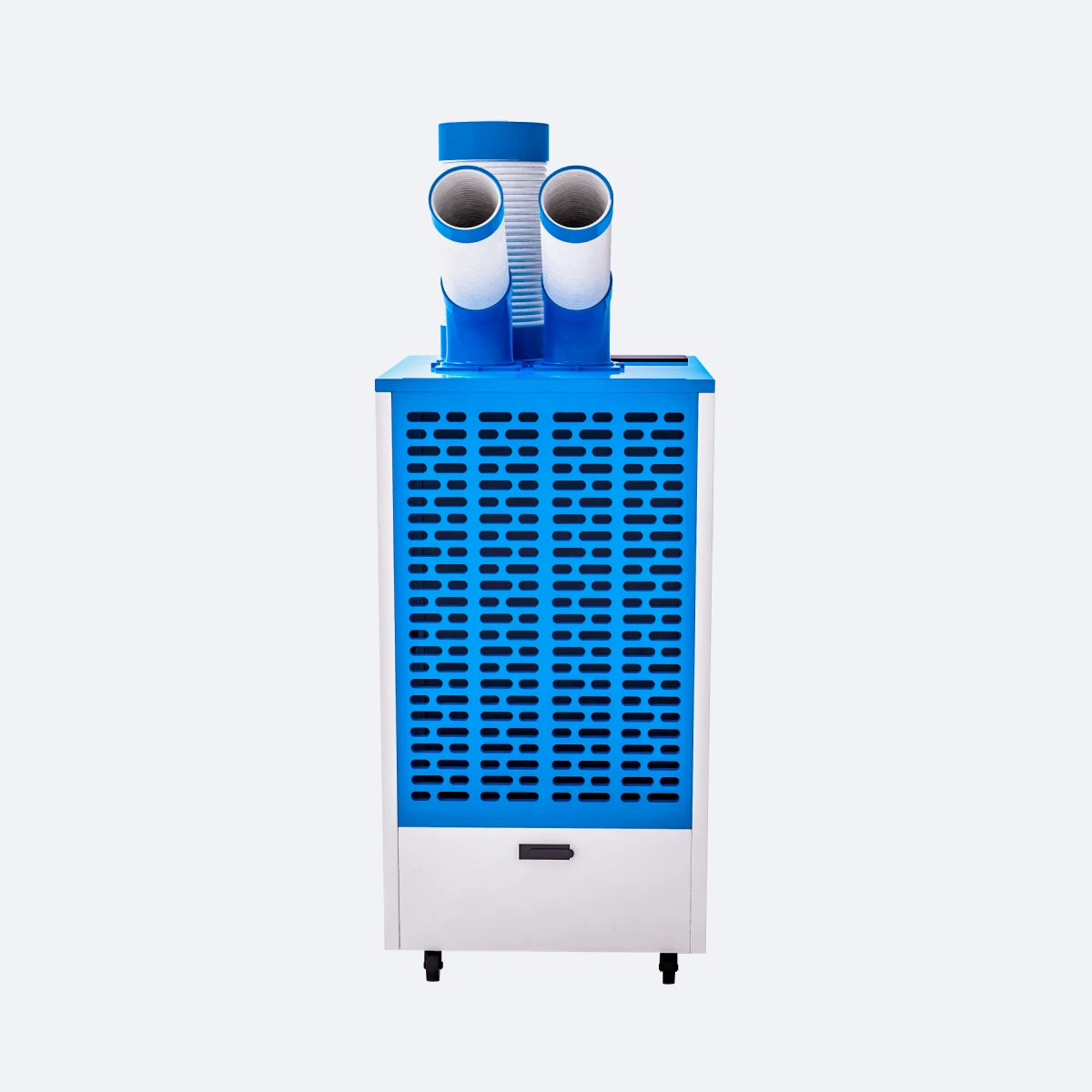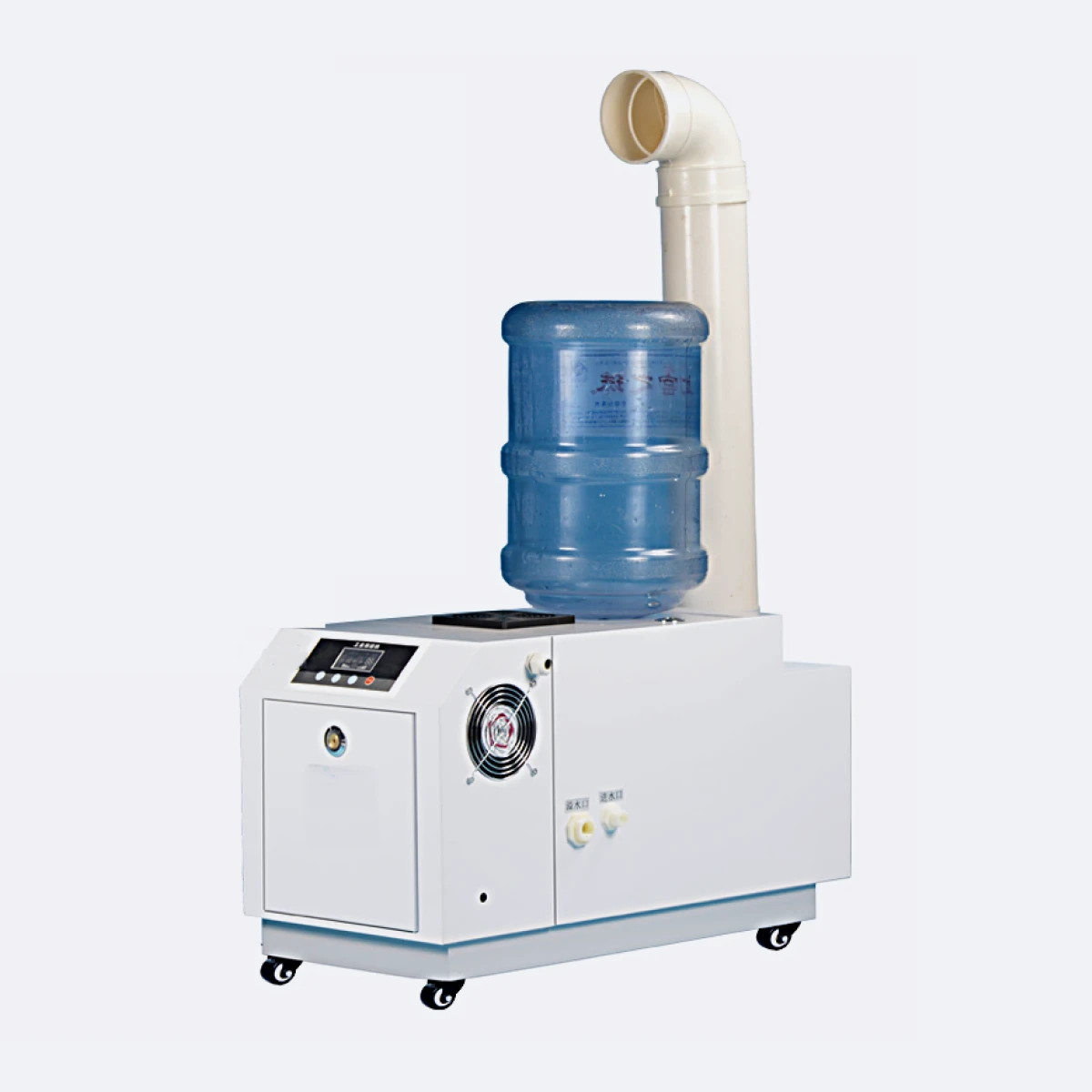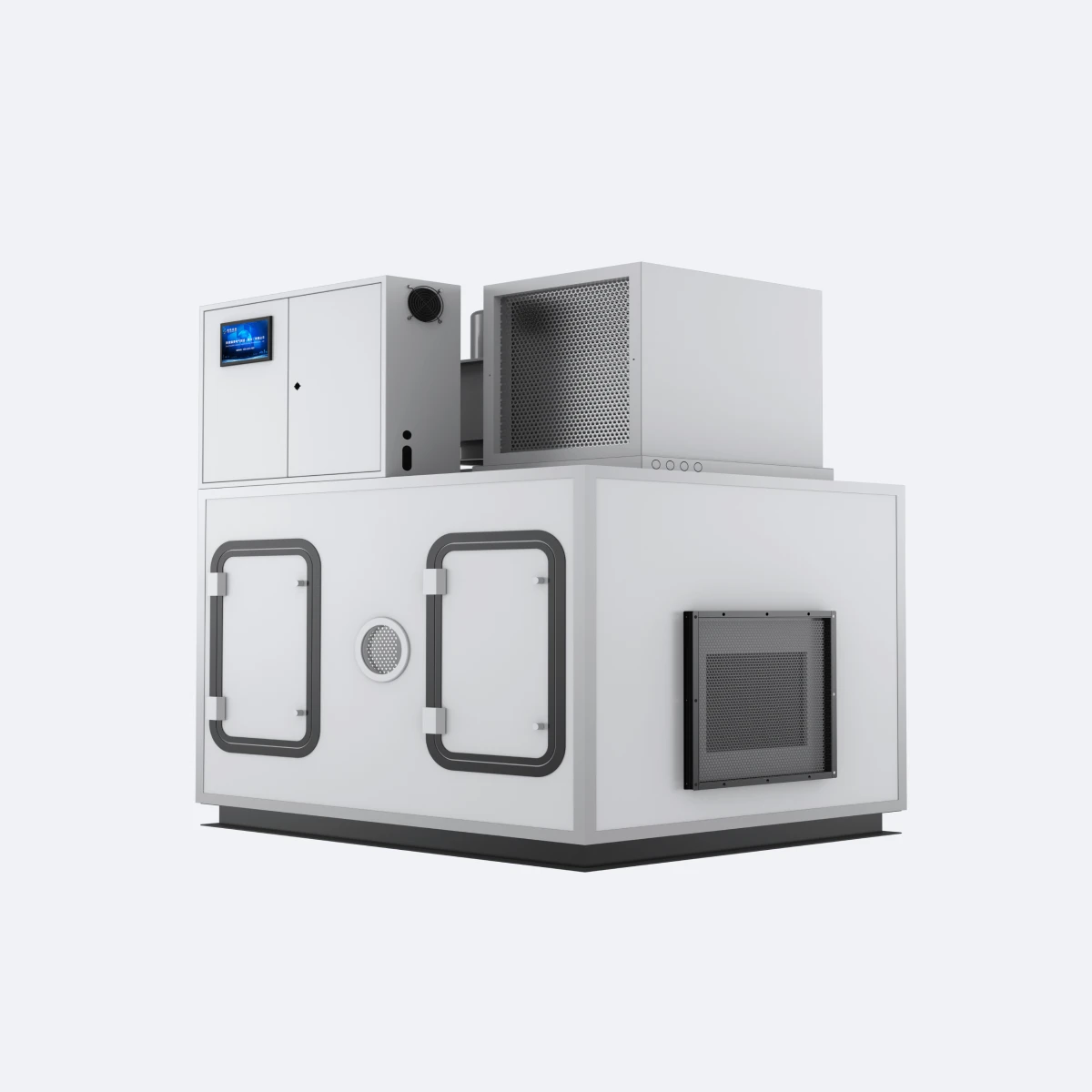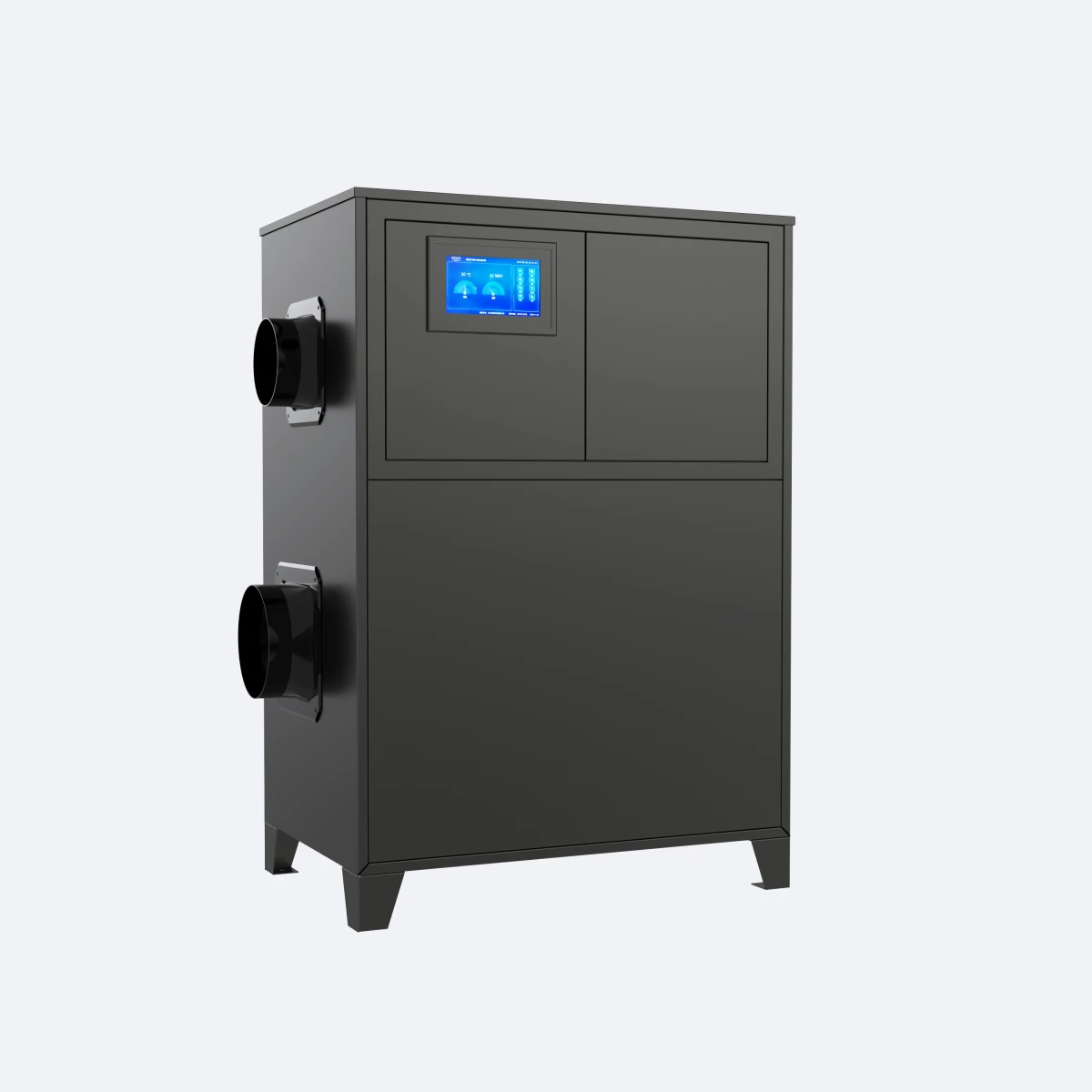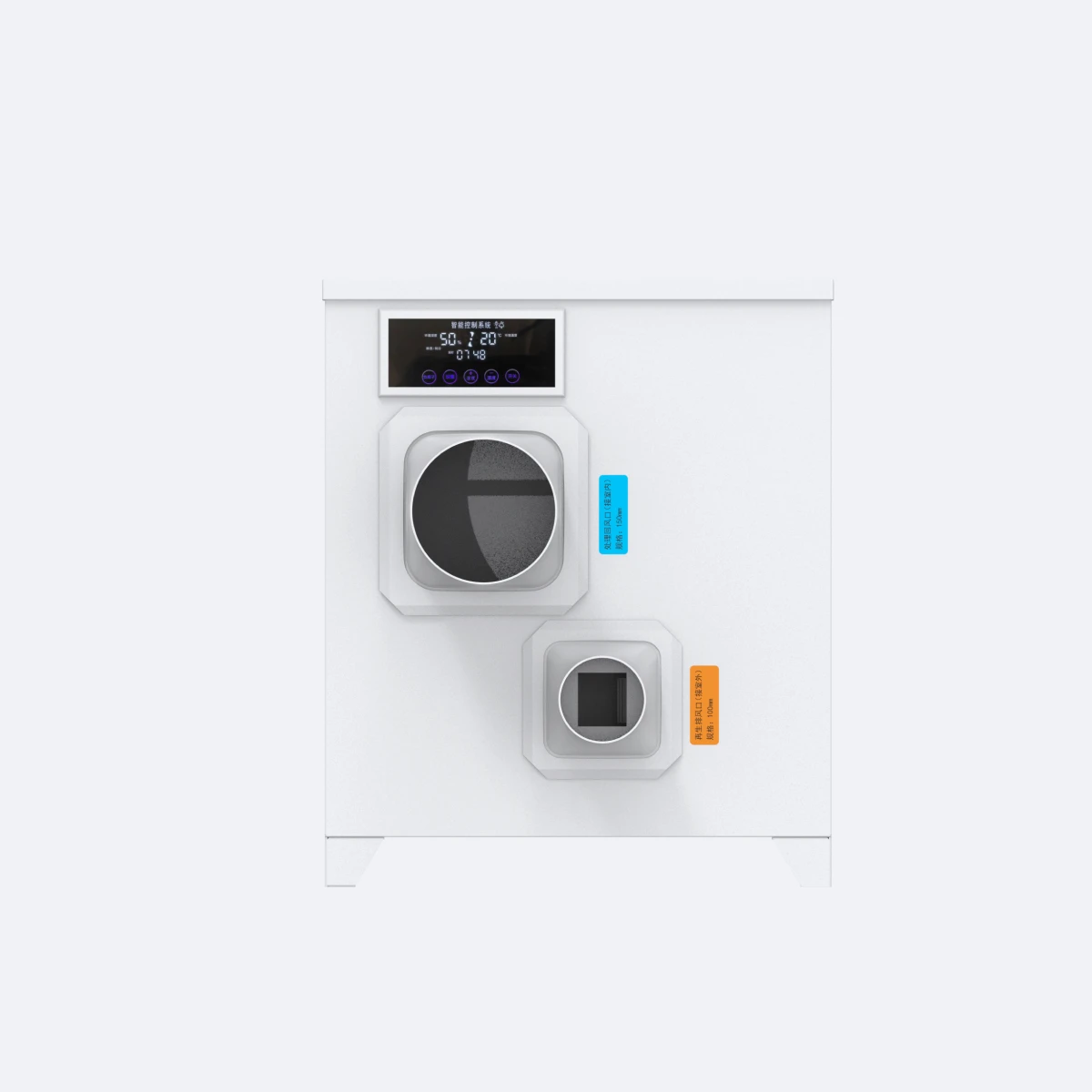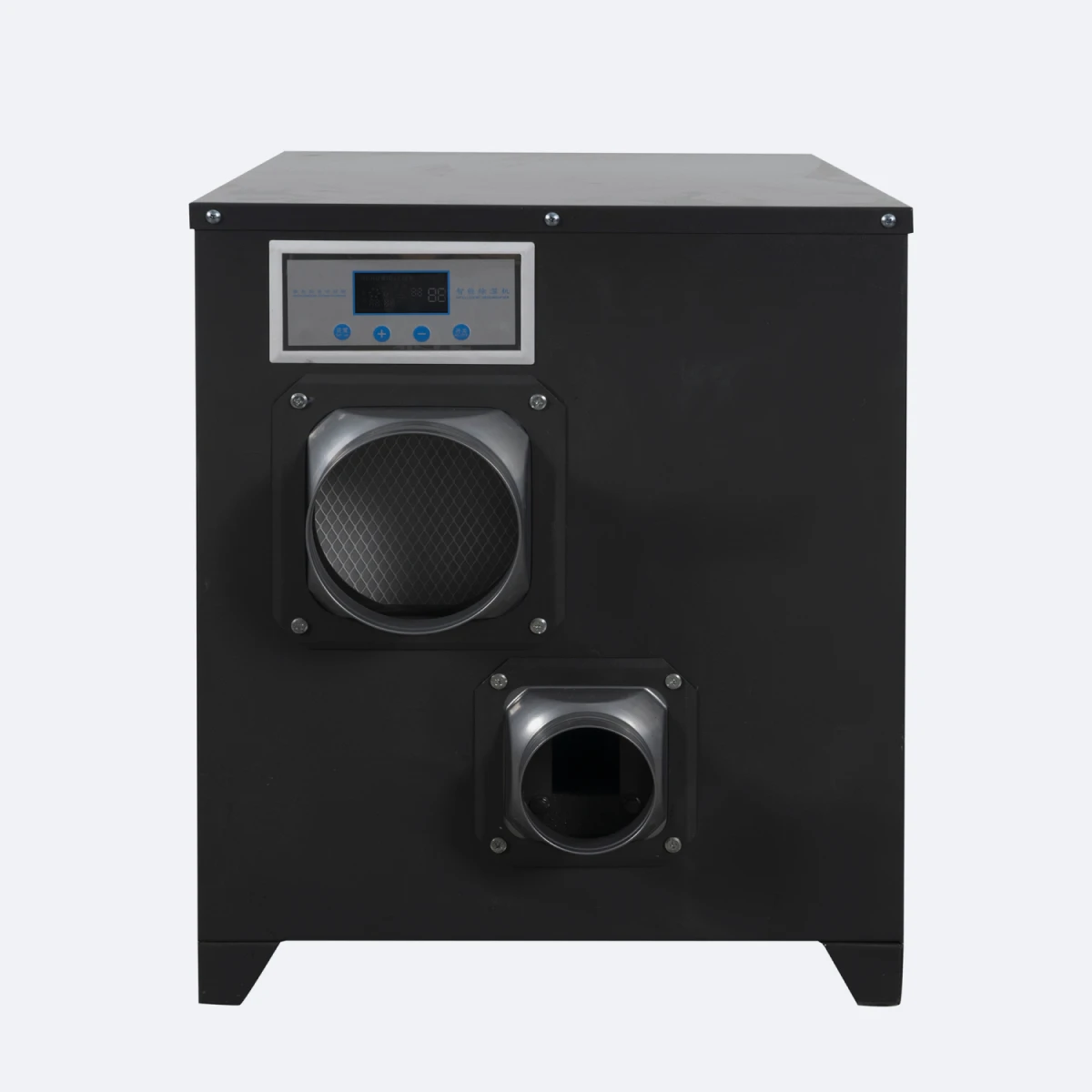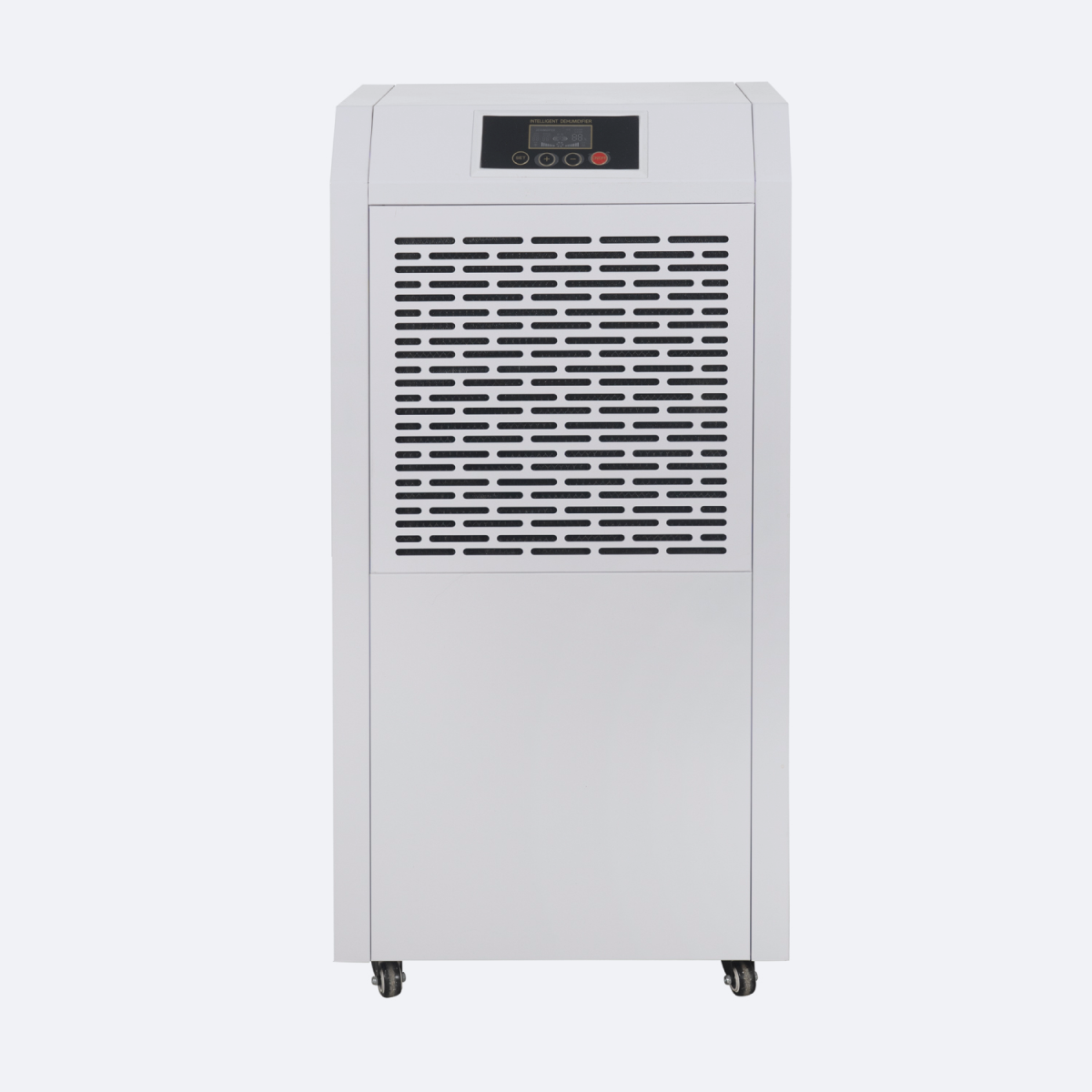
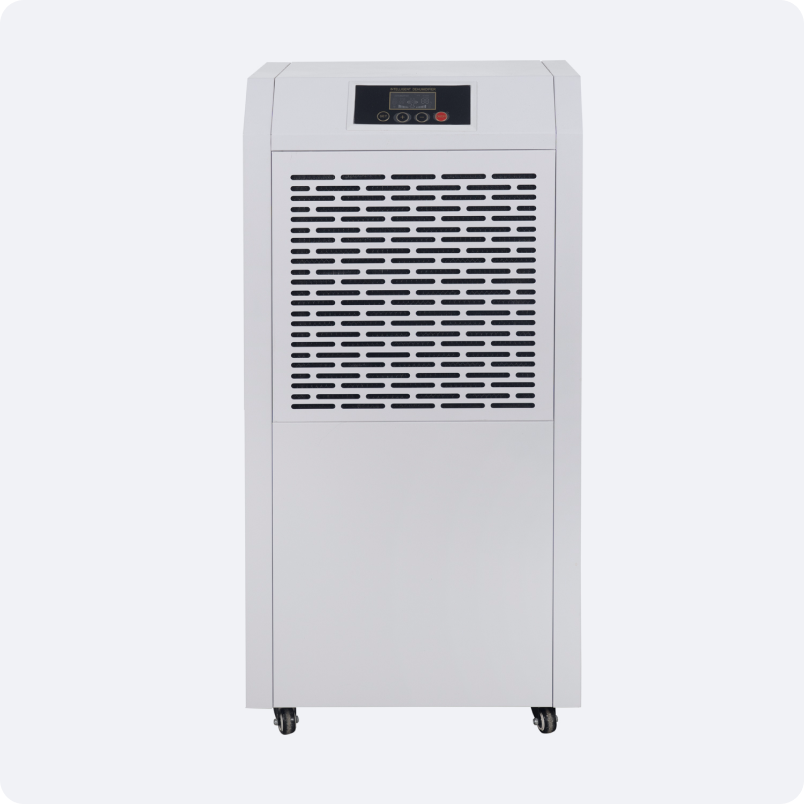
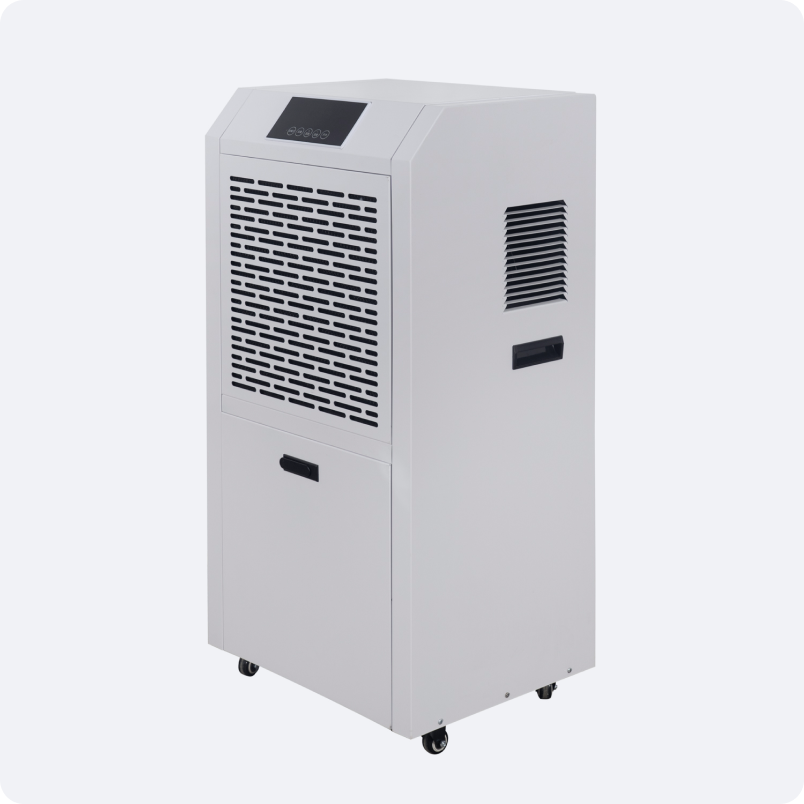
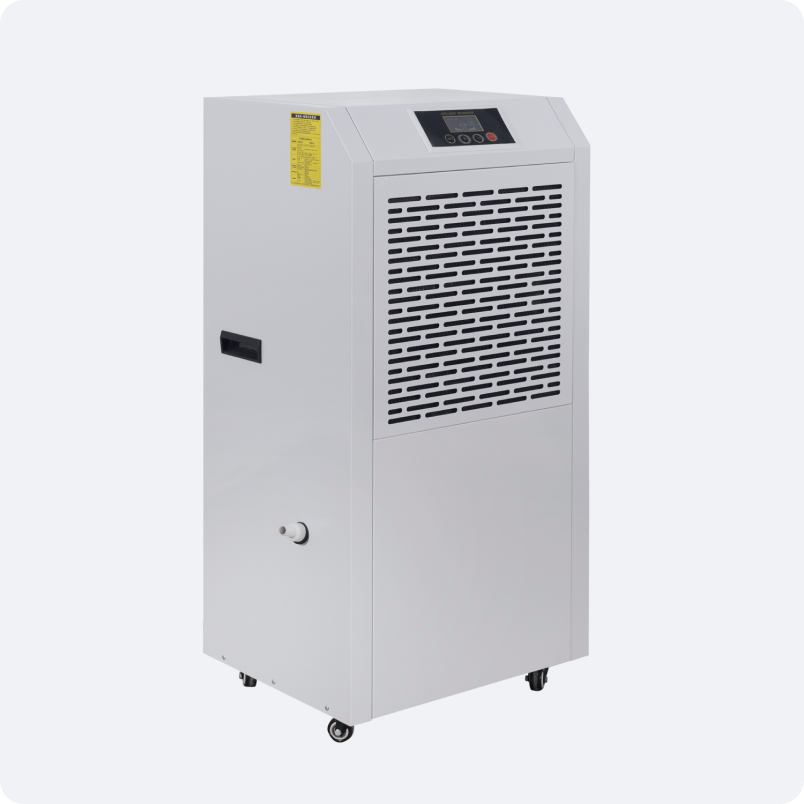
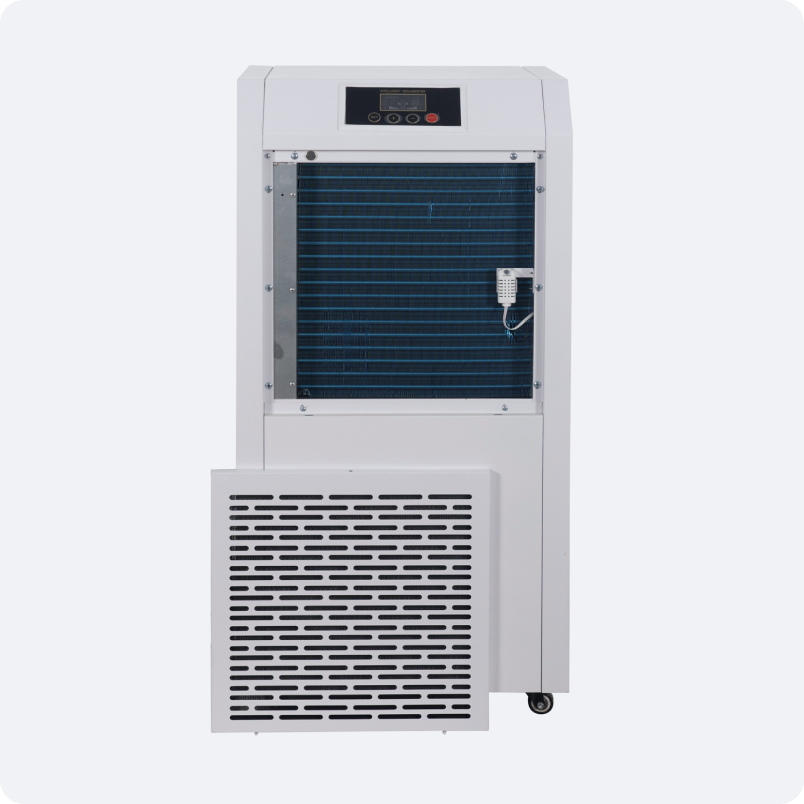
| Item | Specification |
|---|---|
| Dehumidification Capacity (30℃, 80%RH) | 90L/D |
| Power Supply | 220V/50Hz |
| Rated Power | 1250W |
| Noise Level | ≤55dB(A) |
| Air Circulation | 1200 m³/h |
| Humidity Adjustment Range | 30-80% |
| Applicable Area | 80-120 ㎡ |
| Working Temperature | 5-38℃ |
| Drainage Method | Water tank + water pipe (optional) |
| Product Dimensions (L×W×H) | 500×400×1025mm |
| Packing Dimensions (Carton) | 61×51×1130mm |
| Refrigerant | R410/290A |
| Net Weight / Gross Weight | 45kg / 48kg |
| FOB Shanghai (USD) | 320 |
Engineered for Unregulated Structures: The Dehumidification Unit for Outdoor Sheds
Outdoor storage structures and detached workshops fundamentally lack the thermal insulation and central HVAC integration of primary commercial buildings. This isolation subjects the interior to drastic diurnal temperature fluctuations, directly causing the enclosed air to frequently drop below its dew point. A dedicated dehumidification unit for outdoor sheds is mechanically engineered to intervene in this continuous condensation cycle. By aggressively extracting water vapor from the stagnant ambient air, these compact but heavy-duty systems stabilize the internal microclimate, preventing the rapid accumulation of moisture on cold structural walls, metal roofing panels, and concrete slab floors.
Corrosion Prevention via an Outbuilding Moisture Extractor
Unheated exterior structures are frequently utilized for the overflow storage of industrial hardware and machined components. When left in an unregulated, high-humidity environment, metal inventory is highly susceptible to rapid galvanic corrosion and micro-rusting. Deploying a robust outbuilding moisture extractor is a critical preventative measure. By driving down the internal vapor pressure, the machinery ensures that stored industrial pump assemblies, raw aluminum alloys like ADC12, and machined motorcycle cylinder heads remain completely dry and free from oxidative damage during long-term storage, preserving their exact factory tolerances until they are ready for deployment or assembly.
Thermal Dynamics of a Workshop Shed Air Dryer
Operating mechanical climate equipment in uninsulated structures requires specialized thermodynamic engineering, as ambient temperatures routinely drop during overnight hours or seasonal shifts. Standard residential compressors easily freeze under these conditions. We manufacture every workshop shed air dryer with an integrated active defrost system to counter this physical limitation. Utilizing a hot gas bypass valve, the system's PLC detects frost accumulation on the evaporator coils and temporarily redirects heated refrigerant to rapidly melt the ice. This automated thermal cycle ensures the equipment maintains continuous, high-efficiency moisture extraction even when the structure's interior temperature approaches freezing.
Material Preservation with a Storage Shed Humidity Controller
Beyond metal oxidation, high ambient humidity wreaks havoc on stored organic and porous materials. A reliable storage shed humidity controller is structurally necessary to protect expensive raw materials from permanent physical deformation. Maintaining a strict, low-moisture environment is the only way to ensure that sensitive hardwood materials, such as teak parquet and structural plywood, do not absorb suspended atmospheric water vapor. By strictly regulating the equilibrium moisture content of the air, the equipment prevents these wooden assets from expanding, warping, or developing deep-seated fungal rot before they can be fabricated or installed.
Autonomous Operation of Outdoor Cabin Dehumidifying Equipment
Equipment deployed in detached or remote structures must operate entirely without daily human intervention. Relying on personnel to manually empty internal water collection tanks in an outbuilding is a logistical liability. To guarantee uninterrupted environmental protection, our outdoor cabin dehumidifying equipment is manufactured with automated water routing systems. Every unit features a continuous gravity drainage port that can be piped directly through the structural wall to the exterior. For locations where gravity drainage is anatomically impossible, configurations are available with integrated high-lift condensate pumps, ensuring extracted water is reliably ejected from the structure regardless of the internal setup.