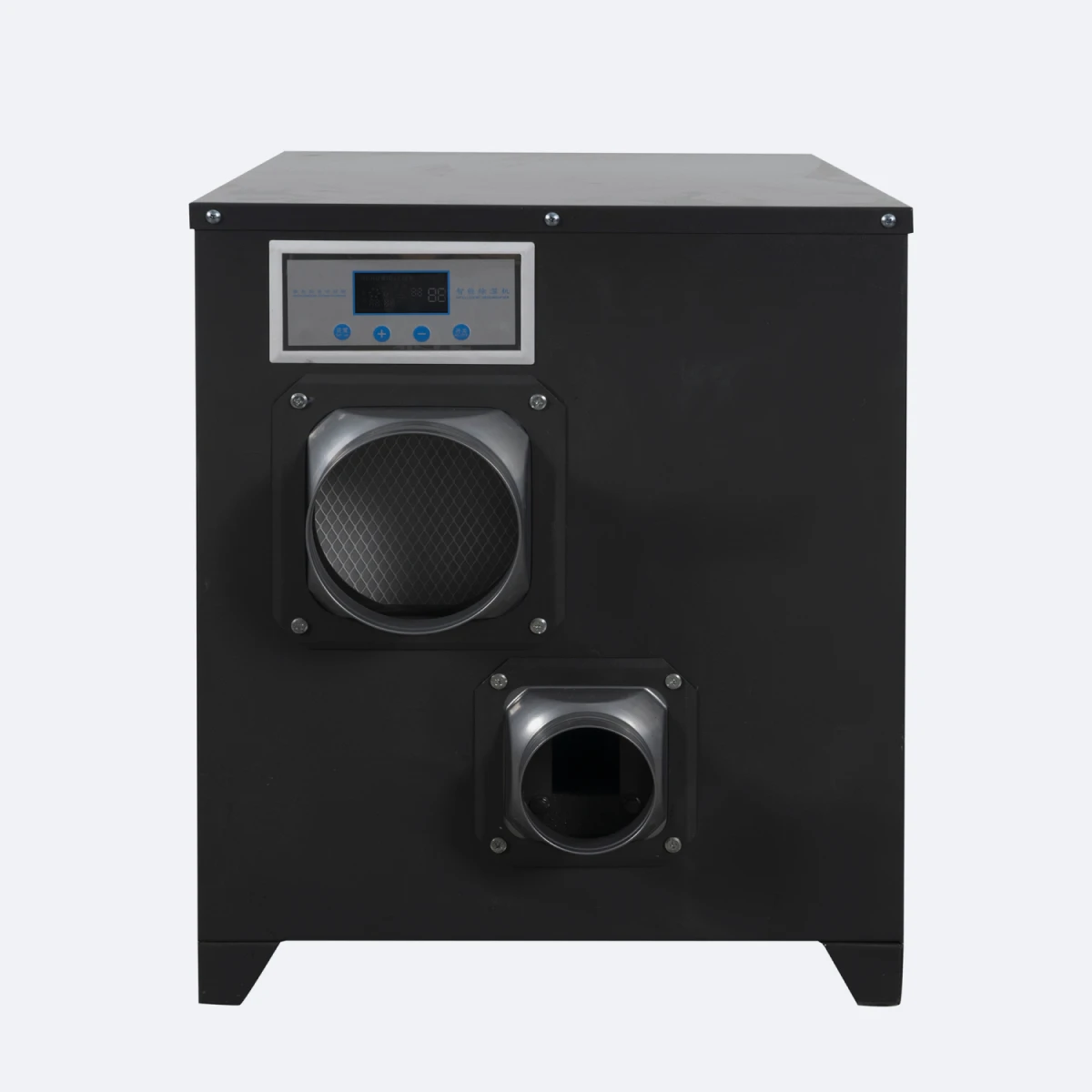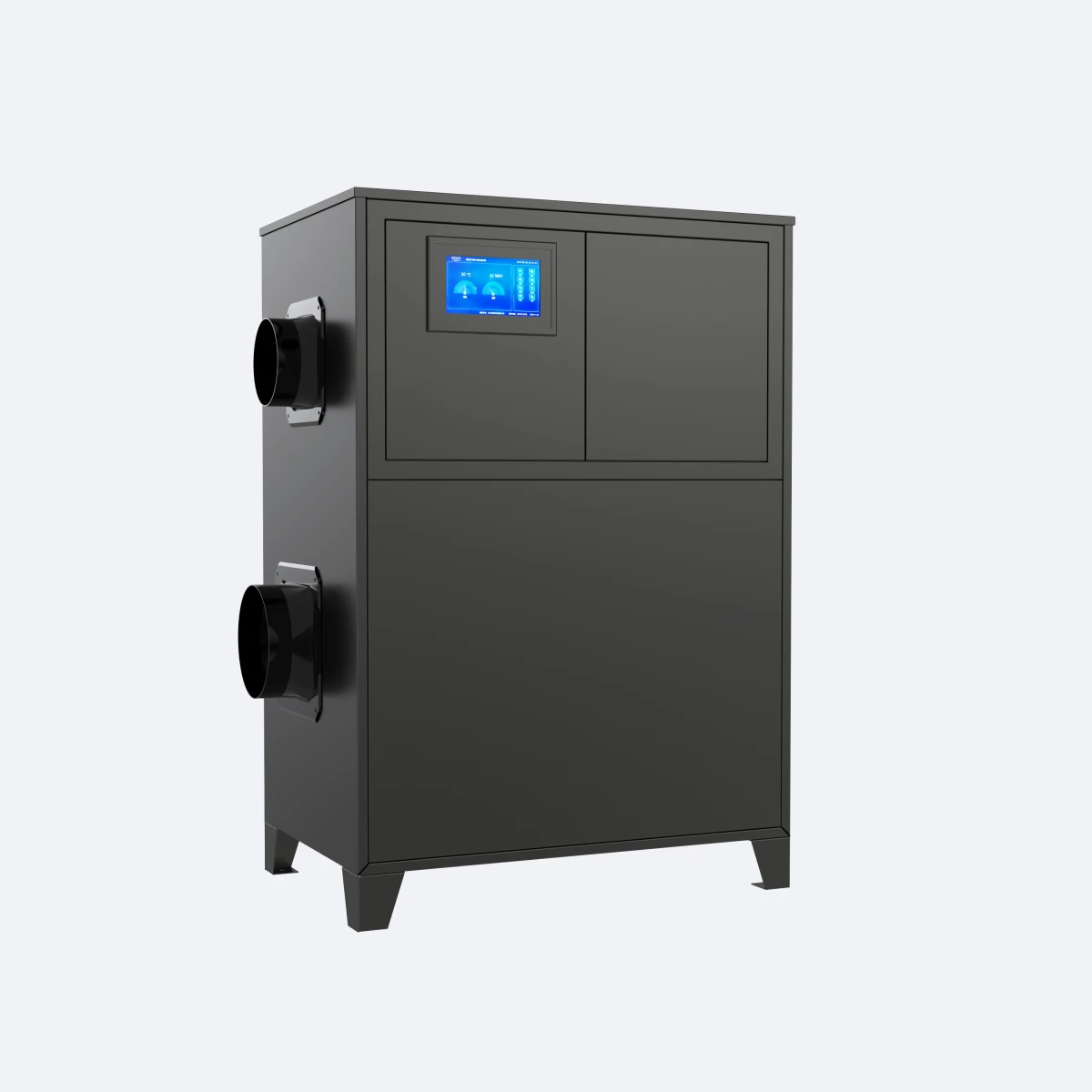
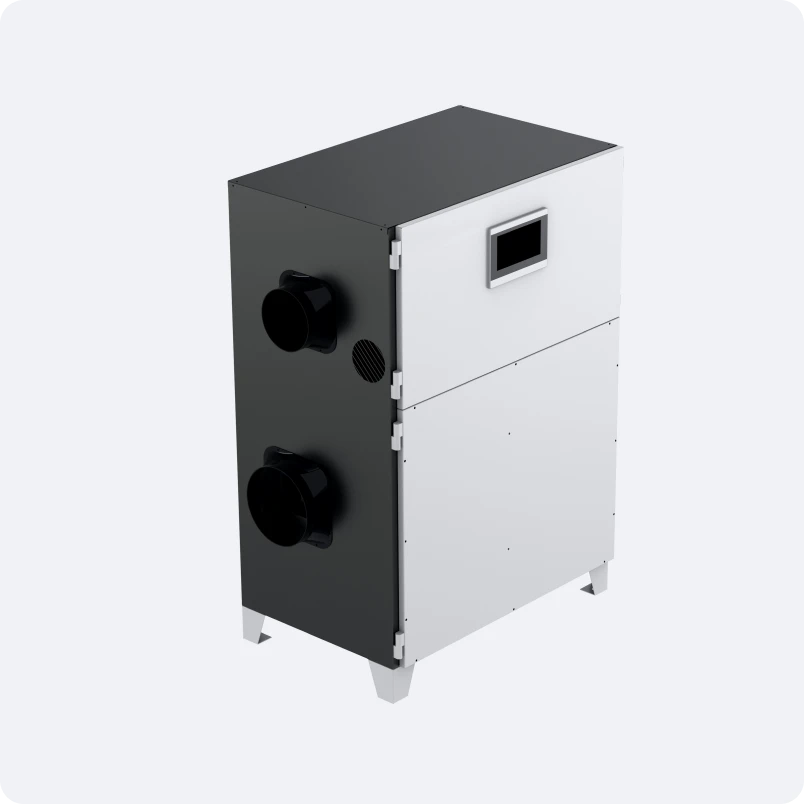
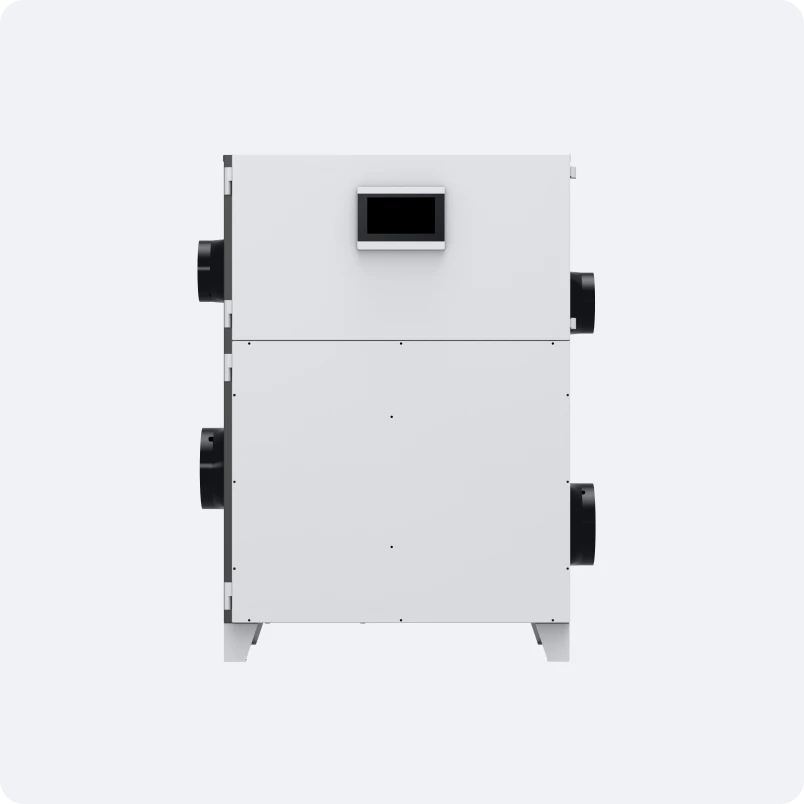
| Item | ROD-G |
|---|---|
| Power Supply (V/Hz) | 380V |
| Process Air Volume (m³/h) | 1000 |
| Dehumidification Capacity (kg/h) | 5.5-6 |
| Max Dehumidification (kg/h) | 6 |
| Dehumidification (L/D) | 144 |
| Regeneration Air Volume (m³/h) | 340 |
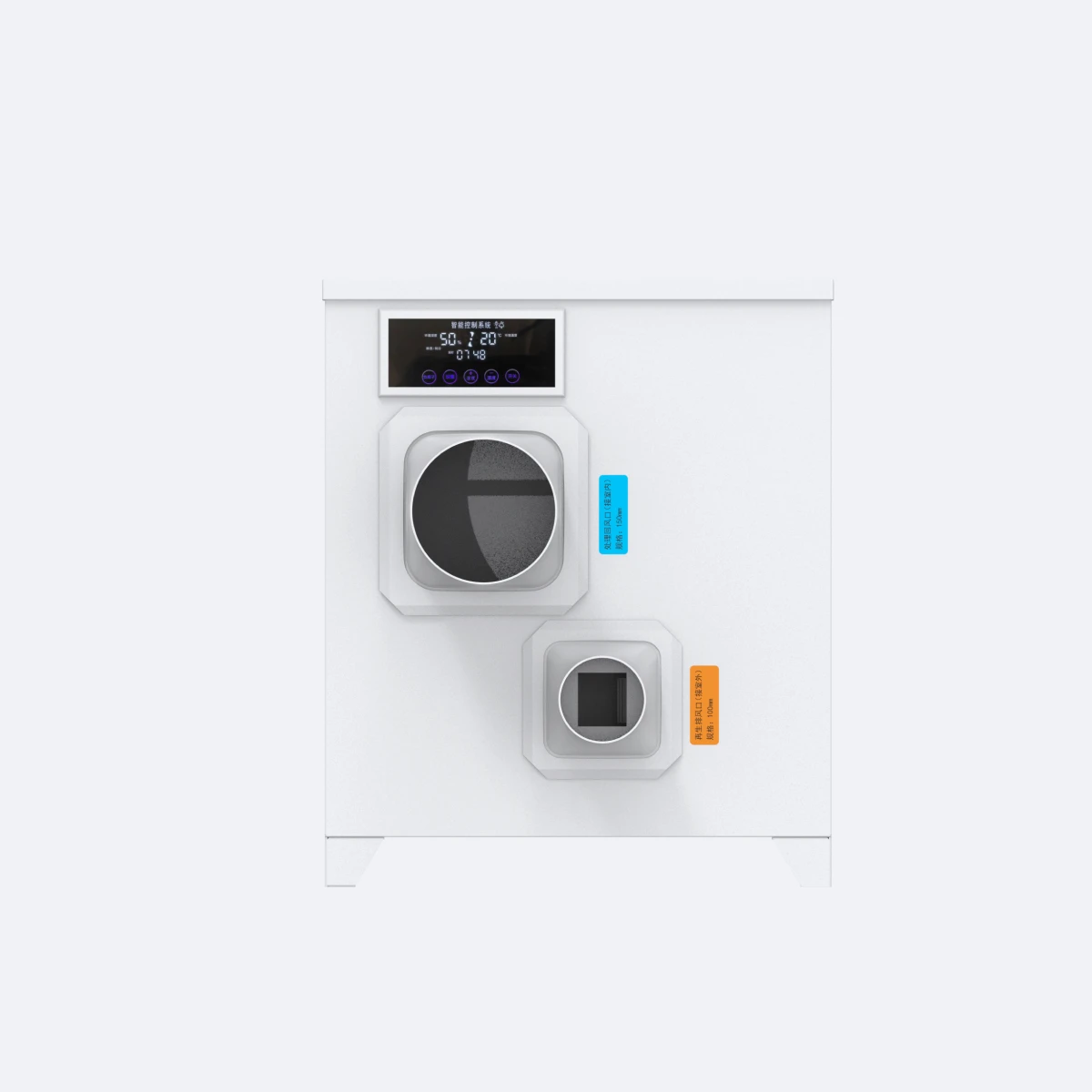
| Process Inlet/Outlet Diameter (mm) | 200/200 |
| Regeneration Inlet/Outlet Diameter (mm) | 150/150 |
| Operating Current (A) | 24 |
| Regeneration Heating Power (kW) | 10 |
| Total Power (kW) | 12 |
| Packing Weight (kg) | 203 |
| Net Weight (kg) | 196 |
| Estimated Packing Dimensions (mm) | 990×980×1375 |
| Appearance Dimensions (mm) | 940×940×1175 |
Engineered for Extreme Conditions: Desiccant Moisture Removal
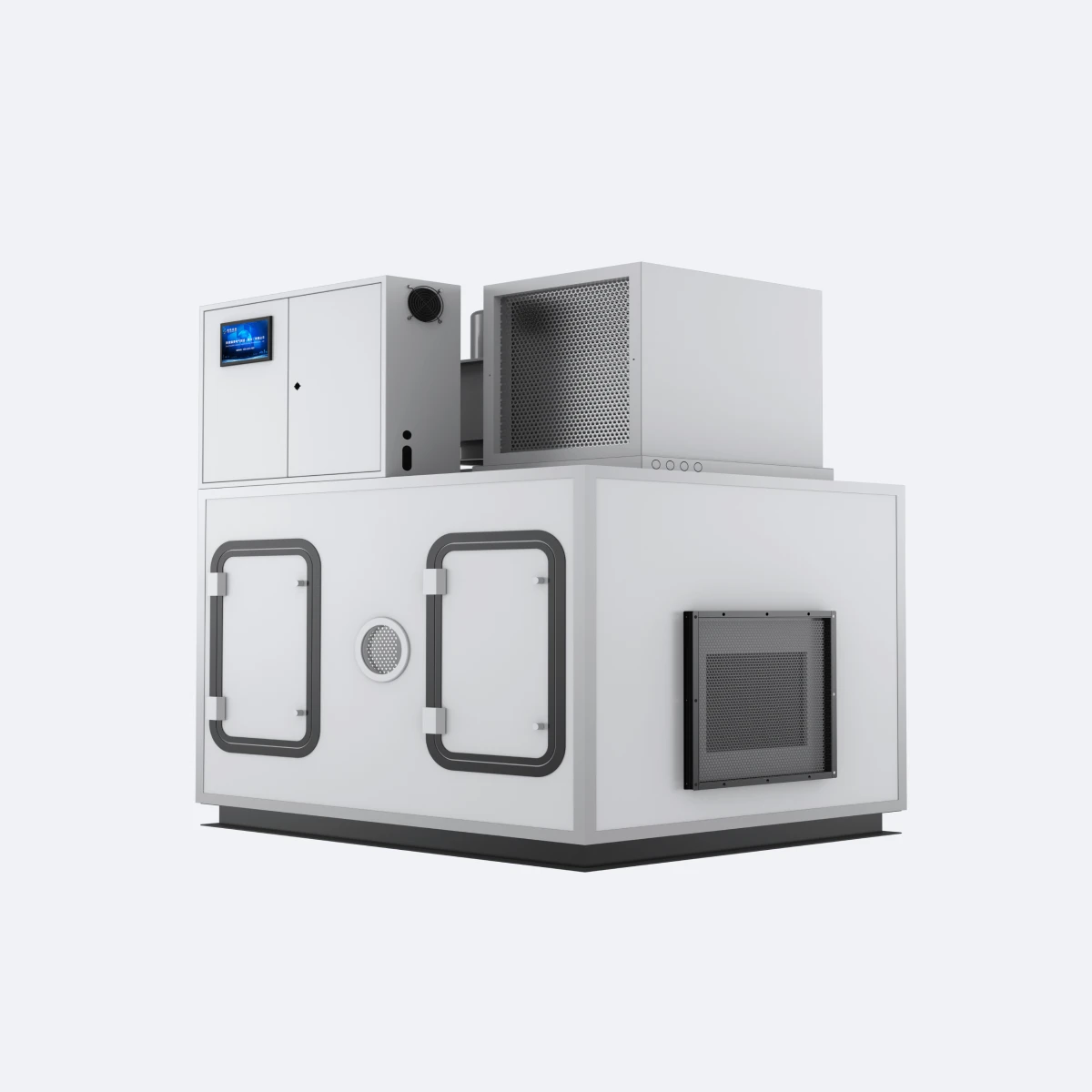
When traditional refrigerant-based cooling reaches its physical limits, facility managers turn to adsorption-based technologies. Our systems utilizing continuous desiccant moisture removal are engineered to physically extract water vapor from the air using highly porous materials, such as silica gel or molecular sieves. Because this process does not rely on cooling the air below its dew point to create condensation, the equipment can operate highly efficiently even in sub-zero temperatures and achieve the strictly controlled, ultra-low humidity levels required by advanced manufacturing processes.
Performance Metrics of Adsorption Dehumidification Technology
The primary engineering advantage of adsorption dehumidification technology is its consistent performance across a wide range of inlet conditions. Standard mechanical dehumidifiers lose efficiency as the ambient temperature drops, but desiccant systems maintain their moisture extraction capacity regardless of the surrounding cold. By continuously passing process air through a slowly rotating desiccant matrix, our equipment can drive relative humidity down to single digits and maintain exceptionally low dew points, preventing condensation on cold surfaces and halting moisture-related degradation entirely.
Critical Industry Applications for Desiccant Air Drying Equipment
Industries that handle highly hygroscopic materials or operate massive cold storage facilities rely heavily on precise atmospheric management to prevent product loss and structural damage. High-capacity desiccant air drying equipment is essential in these sectors. Key applications include:
- Cold Storage and Industrial Freezers: Preventing ice build-up on evaporator coils, floors, and conveyor belts, thereby reducing defrost cycles and improving worker safety.
- Dry Rooms for Battery Manufacturing: Providing the extreme dry environments necessary to prevent hazardous reactions during lithium-ion cell assembly.
- Pharmaceutical and Nutraceuticals: Ensuring powders flow smoothly during tableting and encapsulation without clumping or sticking to machinery.
- Archival Storage and Museums: Maintaining flat, stable humidity profiles to preserve sensitive documents, film, and artifacts from mold and physical warping.
Facility Integration of Industrial Desiccant Humidity Control
Effective environmental management requires equipment that fits seamlessly into existing plant infrastructure. Our systems for industrial desiccant humidity control are designed with modularity in mind. They can be installed as standalone systems processing recirculated room air, or integrated directly into a facility’s makeup air unit (MAU) to treat 100% outside air before it enters the building. We offer customizable configuration options for the reactivation heat source—including electric, steam, or direct-fired gas—allowing plant engineers to utilize the most cost-effective utility available on-site.
Operational Longevity and Maintenance of Desiccant Climate Solutions
Industrial machinery must be built to run continuously with minimal intervention. We engineer our desiccant climate solutions to prioritize operational longevity and ease of service. The core desiccant media is highly resistant to surface flaking and degradation, ensuring years of stable moisture absorption. The equipment cabinets are constructed from heavy-gauge, double-wall insulated steel to withstand factory environments and prevent internal energy loss. Routine maintenance is simplified by providing easy access panels for quick inspection of drive belts, seals, and the rapid replacement of protective pre-filters, keeping your production environment stable and compliant.