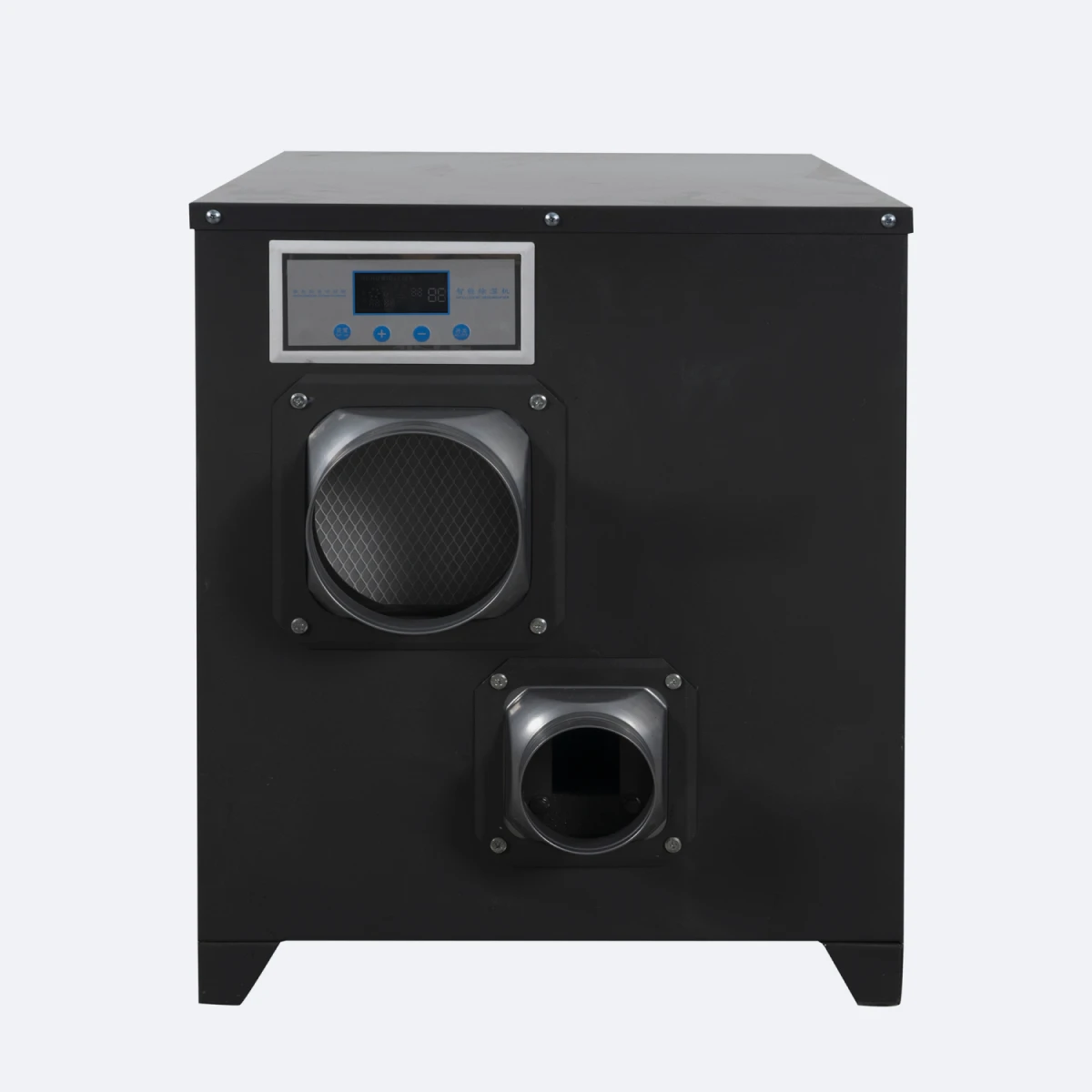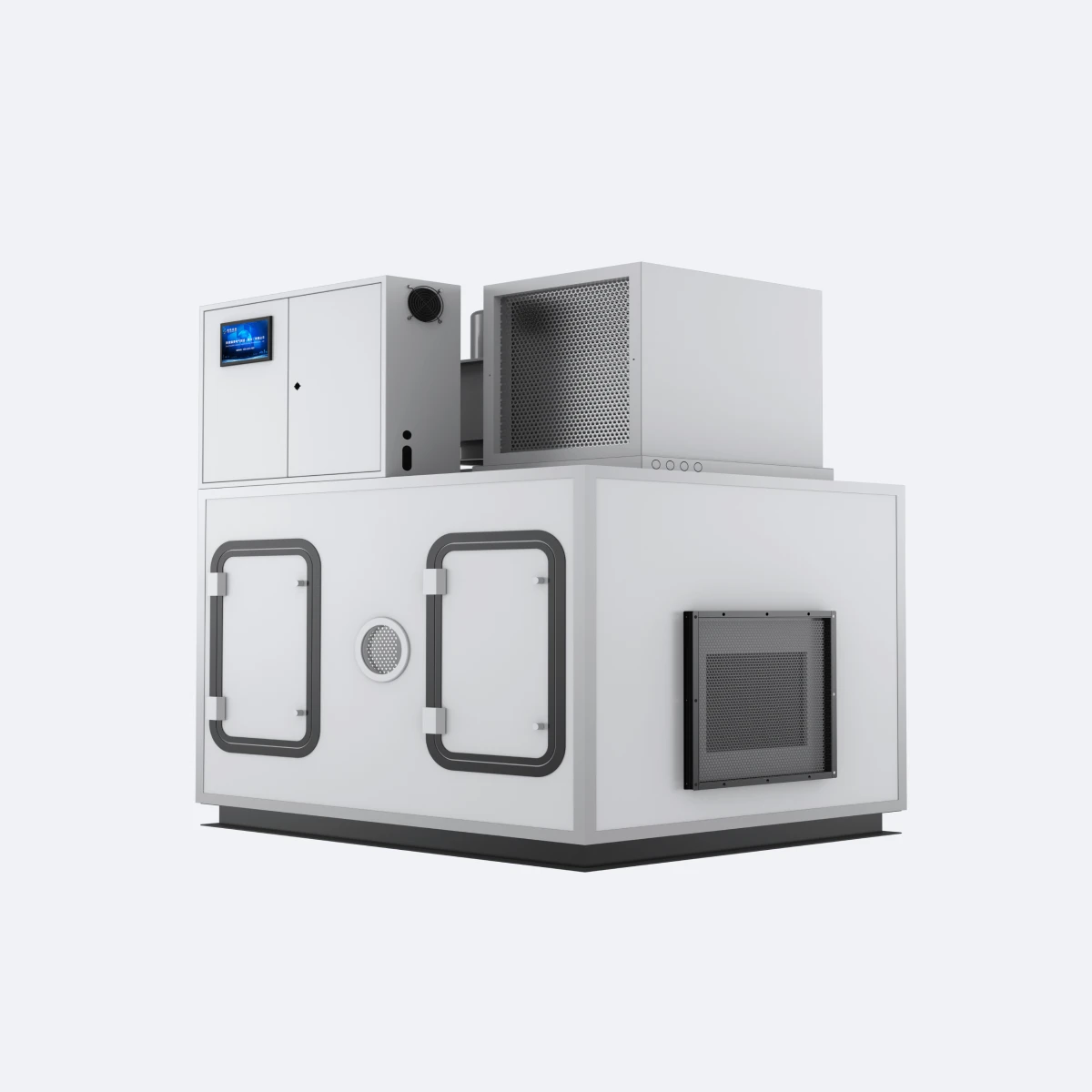
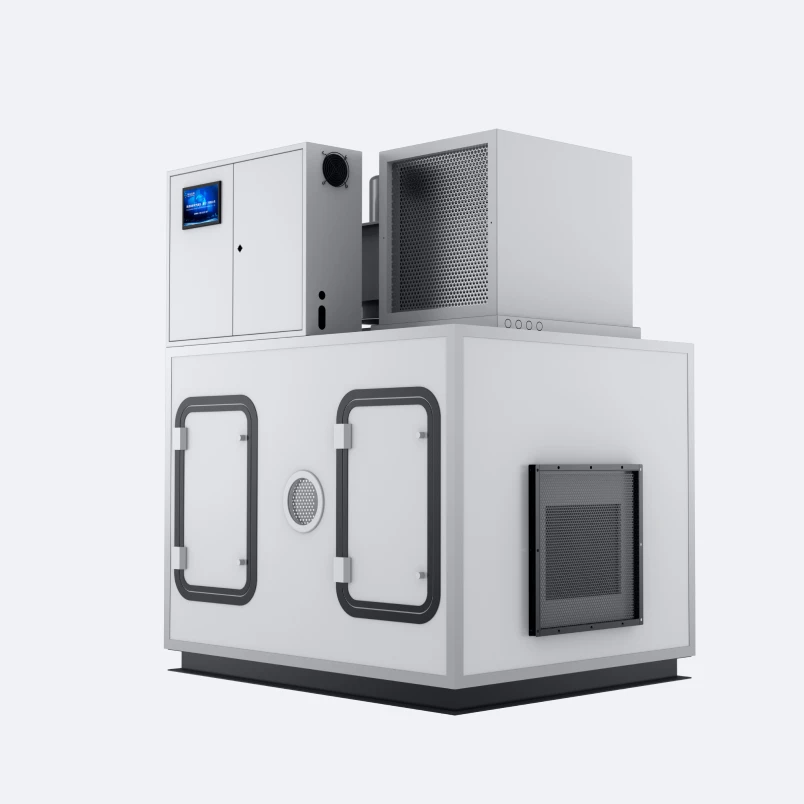
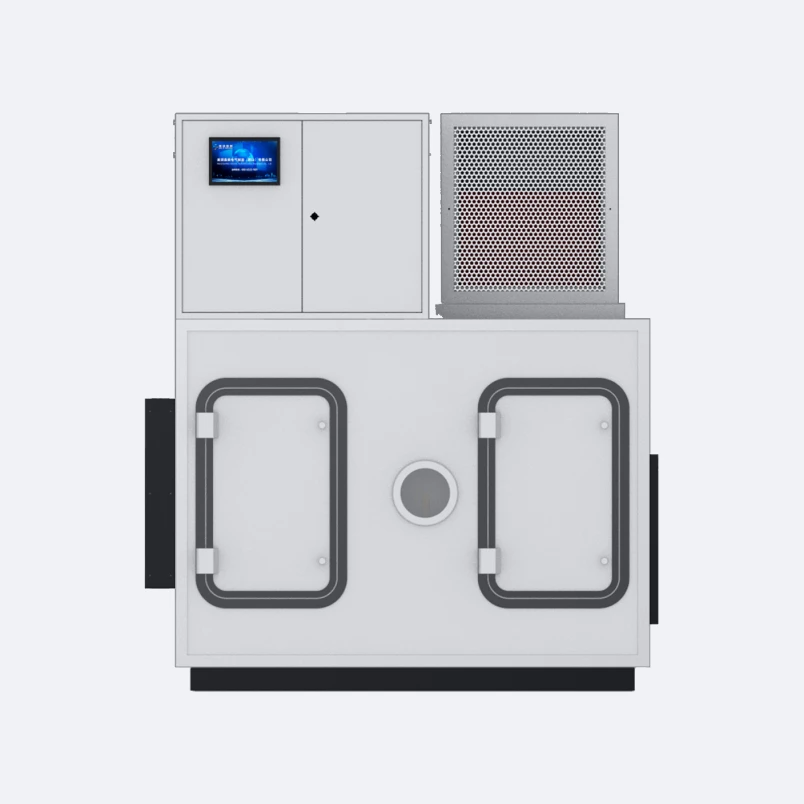
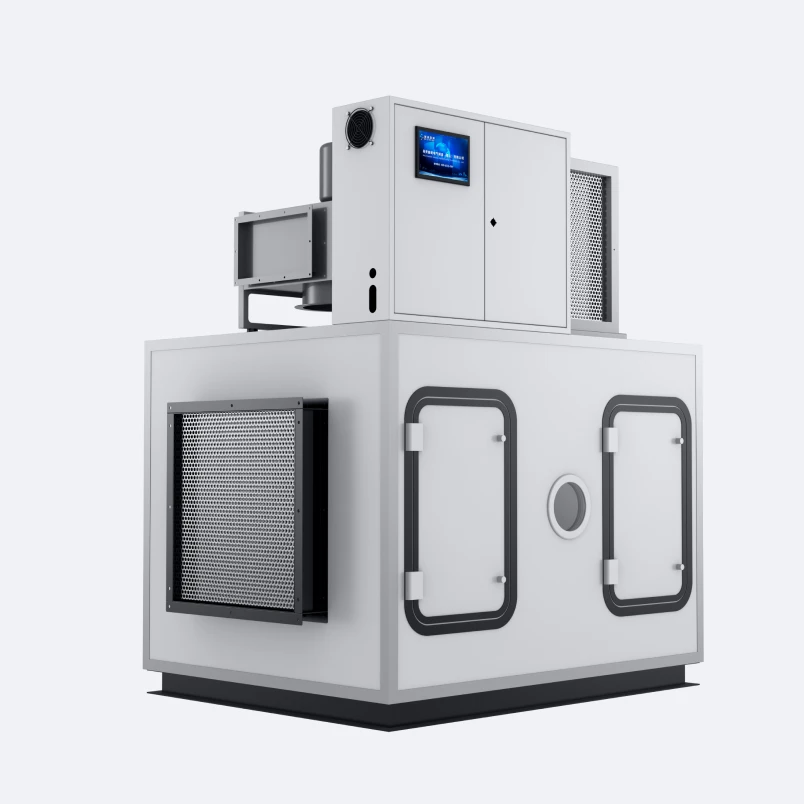
| Item | ROD-H | ROD-I |
|---|---|---|
| Model | ROD-H | ROD-I |
| Power Supply (V/Hz) | 380V | 380V |
| Process Air Volume (m³/h) | 1500 | 2000 |
| Dehumidification Capacity (kg/h) | 10 | 13 |
| Max Dehumidification (kg/h) | 10 | 13 |
| Dehumidification (L/D) | 240 | 312 |
| Regeneration Air Volume (m³/h) | 500 | 670 |
| Process Inlet/Outlet Diameter (mm) | 600/400 | 600/400 |
| Regeneration Inlet/Outlet Diameter (mm) | 380×420/100 | 380×420/100 |
| Operating Current (A) | 36 | 46 |
| Regeneration Heating Power (kW) | 15 | 23 |
| Total Power (kW) | 18 | 17 |
| Packing Weight (kg) | 435 | 475 |
| Net Weight (kg) | 423 | 463 |
| Estimated Packing Dimensions (mm) | 1500×1300×1890 | 1500×1300×1890 |
| Appearance Dimensions (mm) | 1430×1000×1630 | 1430×1000×1630 |
Engineered for Ultra-Low Moisture: Desiccant Wheel Dehumidifiers
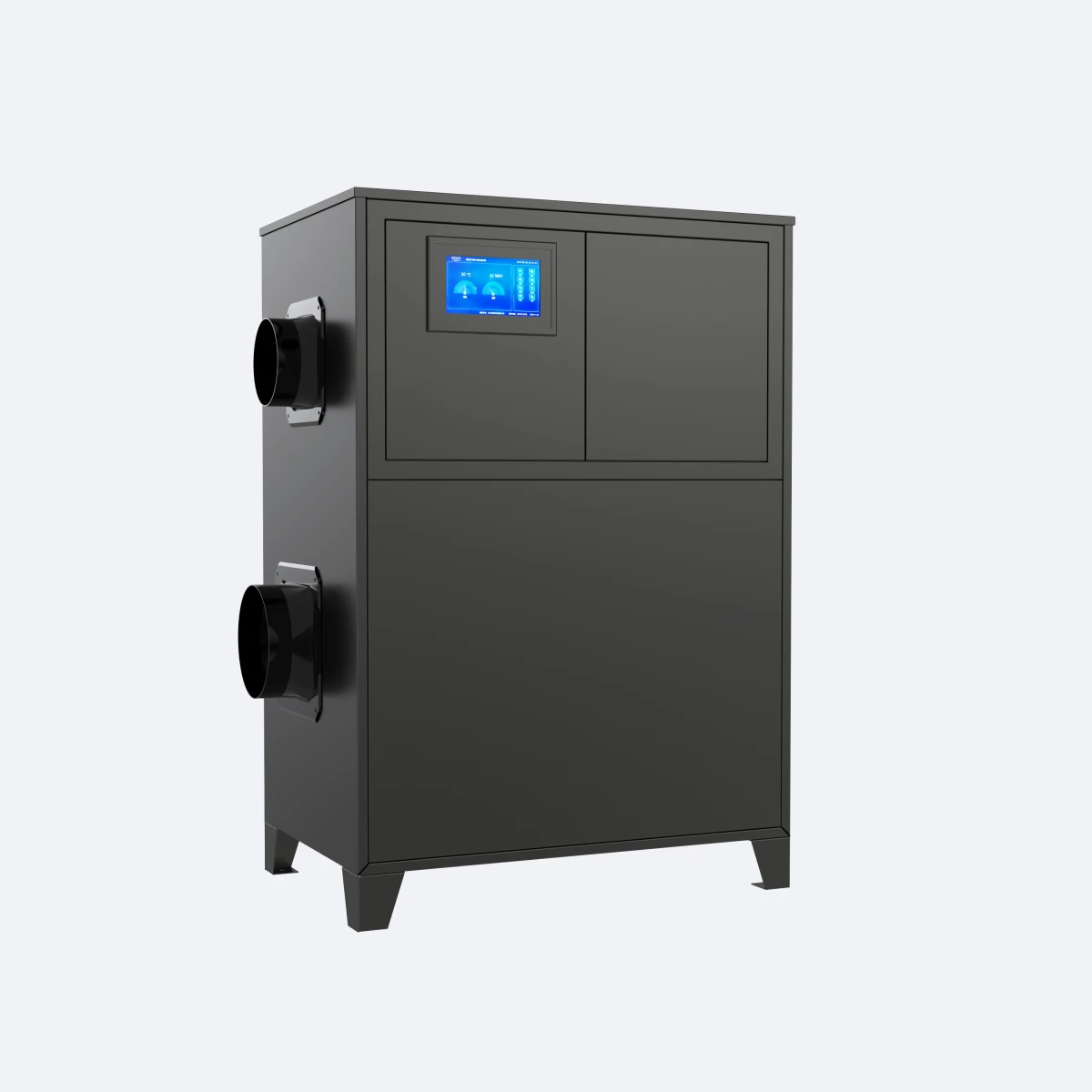
Standard refrigerant-based cooling is often insufficient for facilities requiring strictly controlled, ultra-low humidity environments. Our desiccant wheel dehumidifiers are engineered specifically to overcome the physical limitations of condensation-based moisture removal. By utilizing a highly active desiccant material, typically silica gel or molecular sieve bonded to a structural matrix, these units physically absorb moisture directly from the airstream. This technology allows the equipment to operate effectively even in sub-zero temperatures and achieve exceptional dew points, maintaining the strict atmospheric parameters required for specialized industrial processes.
Core Operating Principles of Rotary Moisture Removal Systems
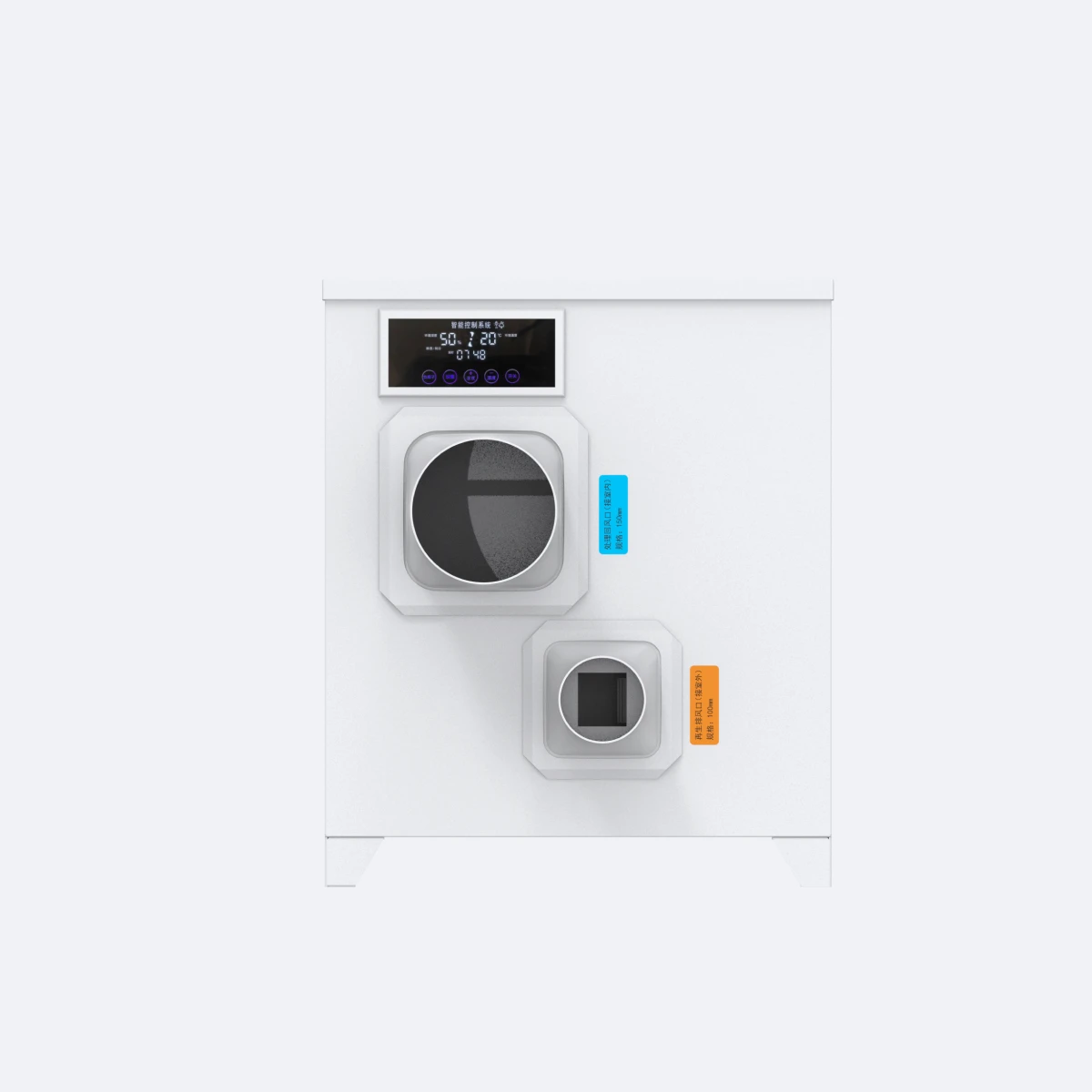
The continuous operation of our rotary moisture removal systems relies on a synchronized, dual-airstream process. The core component is a slowly rotating cylindrical desiccant rotor. As humid process air passes through the primary section of the rotor, moisture is absorbed, and dry air is supplied to the facility. Simultaneously, a separate, heated airstream (reactivation air) passes through a smaller section of the rotating wheel in the opposite direction. This heated air drives the trapped moisture out of the desiccant material and exhausts it outside the building. This continuous cycle ensures uninterrupted moisture removal and stable room conditions.
Key Industrial Applications for Desiccant Rotor Dehumidification Units
Because they can independently control humidity without necessarily cooling the air, desiccant rotor dehumidification units are critical infrastructure in sectors where moisture causes chemical degradation, biological growth, or mechanical failure. Key industrial applications include:
- Lithium Battery Manufacturing: Maintaining ultra-low dew point environments (cleanrooms) to prevent the volatile reaction of lithium components with airborne moisture.
- Pharmaceutical Processing: Preventing powder caking, ensuring accurate tableting, and preserving the chemical stability of hygroscopic active ingredients.
- Food & Beverage Production: Controlling moisture during spray drying, preventing condensation in cold storage corridors, and maintaining product crispness in packaging areas.
- Shipbuilding & Bridge Coating: Providing dry air to prevent flash rusting on sandblasted metal surfaces prior to industrial painting.
Structural Integrity of Our Industrial Rotary Drying Equipment
Equipment operating in harsh industrial environments must be built to resist structural degradation. The housing of our industrial rotary drying equipment is constructed using double-skinned insulated panels. This thermal break design prevents exterior condensation and minimizes internal energy loss. The internal framework is fabricated from cold-rolled steel or stainless steel, providing a rigid chassis that ensures the exact alignment of the rotor seals. High-quality, perimeter friction seals are utilized to separate the process and reactivation airstreams, preventing cross-contamination and maintaining the system's overall moisture removal efficiency.
Maintenance and Efficiency of Rotary Air Dehumidification Systems
Long-term cost of ownership is directly tied to energy consumption and serviceability. Our rotary air dehumidification systems integrate advanced PLC controls to modulate reactivation heater output based on real-time moisture loads, significantly reducing unnecessary energy expenditure. The desiccant rotors themselves are highly durable, resistant to surface flaking, and can be washed if contaminated by airborne particulates. Standard maintenance is straightforward, focusing on routine replacement of pre-filters to protect the rotor surface and periodic inspection of the drive belt and gear motor, ensuring the system delivers reliable performance year after year.